An 8-day Morocco tour is an excellent way to discover some of the country’s most fascinating destinations. From the historic medinas of Marrakech and Fes to the golden dunes of the Sahara Desert, Morocco offers a remarkable combination of culture, history, adventure and natural beauty.
During eight days, travelers can explore traditional villages, cross the spectacular Atlas Mountains, discover ancient kasbahs and experience the unforgettable atmosphere of the desert.
Whether you are visiting Morocco for the first time or looking for a journey that combines its most iconic attractions, this itinerary provides an inspiring introduction to the country.
In this guide, you will discover a suggested day-by-day Morocco itinerary, the main attractions along the route, and useful tips for planning your trip.
Why Choose an 8-Day Morocco Tour?
Morocco is a country of extraordinary contrasts. Historic imperial cities, impressive mountain landscapes, traditional villages and vast desert regions offer completely different experiences within the same journey.
An eight-day itinerary allows you to discover several of these environments while learning about Moroccan traditions and culture.
Some of the main highlights include:
- Exploring the historic streets of Marrakech.
- Crossing the spectacular High Atlas Mountains.
- Visiting the UNESCO-listed village of Ait Ben Haddou.
- Discovering the beautiful Dades and Todra valleys.
- Experiencing the golden dunes of the Sahara Desert.
- Spending a night in a traditional desert camp.
- Exploring the historic medina of Fes.
Although eight days provide enough time to discover several destinations, some journeys involve long driving distances. Careful planning is therefore essential.
Day 1: Arrival in Marrakech
Your Moroccan adventure begins in Marrakech, one of the most famous cities in North Africa.
After arriving at the airport, you can transfer to your hotel or traditional riad and spend the rest of the day exploring the city.
Discover Jemaa el-Fnaa Square
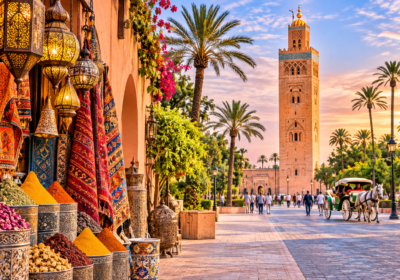
One of the best places to begin your visit is Jemaa el-Fnaa Square, the vibrant heart of Marrakech.
During the day, the square is filled with street performers, market stalls and local traders. In the evening, it becomes even livelier as food stalls and traditional entertainment attract visitors.
Nearby, the narrow streets of the medina lead to colorful souks selling spices, carpets, ceramics, lanterns and handmade products.
Enjoy Your First Moroccan Dinner
Your first evening is an excellent opportunity to discover traditional Moroccan cuisine.
Popular dishes include tagine, couscous, harira and pastilla.
Many restaurants offer rooftop terraces with beautiful views of Marrakech’s historic buildings.
Overnight stay: Marrakech.
Day 2: Exploring the Highlights of Marrakech
The second day is dedicated to discovering the city’s cultural and architectural heritage.
Marrakech has a rich history and offers numerous monuments that reflect the different dynasties that once ruled Morocco.
Bahia Palace
Begin your day with a visit to Bahia Palace, one of Marrakech’s most beautiful historic buildings.
Its peaceful courtyards, decorative tiles and intricately carved ceilings offer an excellent introduction to traditional Moroccan architecture.
Koutoubia Mosque
Continue toward the Koutoubia Mosque, one of the city’s most recognizable landmarks.
Its impressive minaret dominates the skyline and represents an important example of Almohad architecture.
The mosque’s interior is not generally accessible to non-Muslim visitors, but the building can be admired from outside.
Majorelle Garden
Another popular attraction is the Majorelle Garden, a botanical oasis famous for its exotic plants and distinctive blue architecture.
The garden provides a peaceful contrast to the busy streets of the medina.
Explore the Souks
Spend the afternoon discovering Marrakech’s traditional markets.
Walking through the souks allows you to observe local craftsmanship and explore shops selling leather goods, textiles, pottery and spices.
Overnight stay: Marrakech.
Day 3: Marrakech to Ait Ben Haddou and Dades Valley
On the third day, your journey continues toward southern Morocco.
Leaving Marrakech behind, the route crosses the spectacular High Atlas Mountains.
Crossing the High Atlas Mountains
The journey takes you through mountain villages, winding roads and dramatic landscapes.
One of the most famous sections is the Tizi n’Tichka mountain pass, located at approximately 2,260 meters above sea level.
Along the way, you can stop at panoramic viewpoints to admire the surrounding mountains.
Visit Ait Ben Haddou
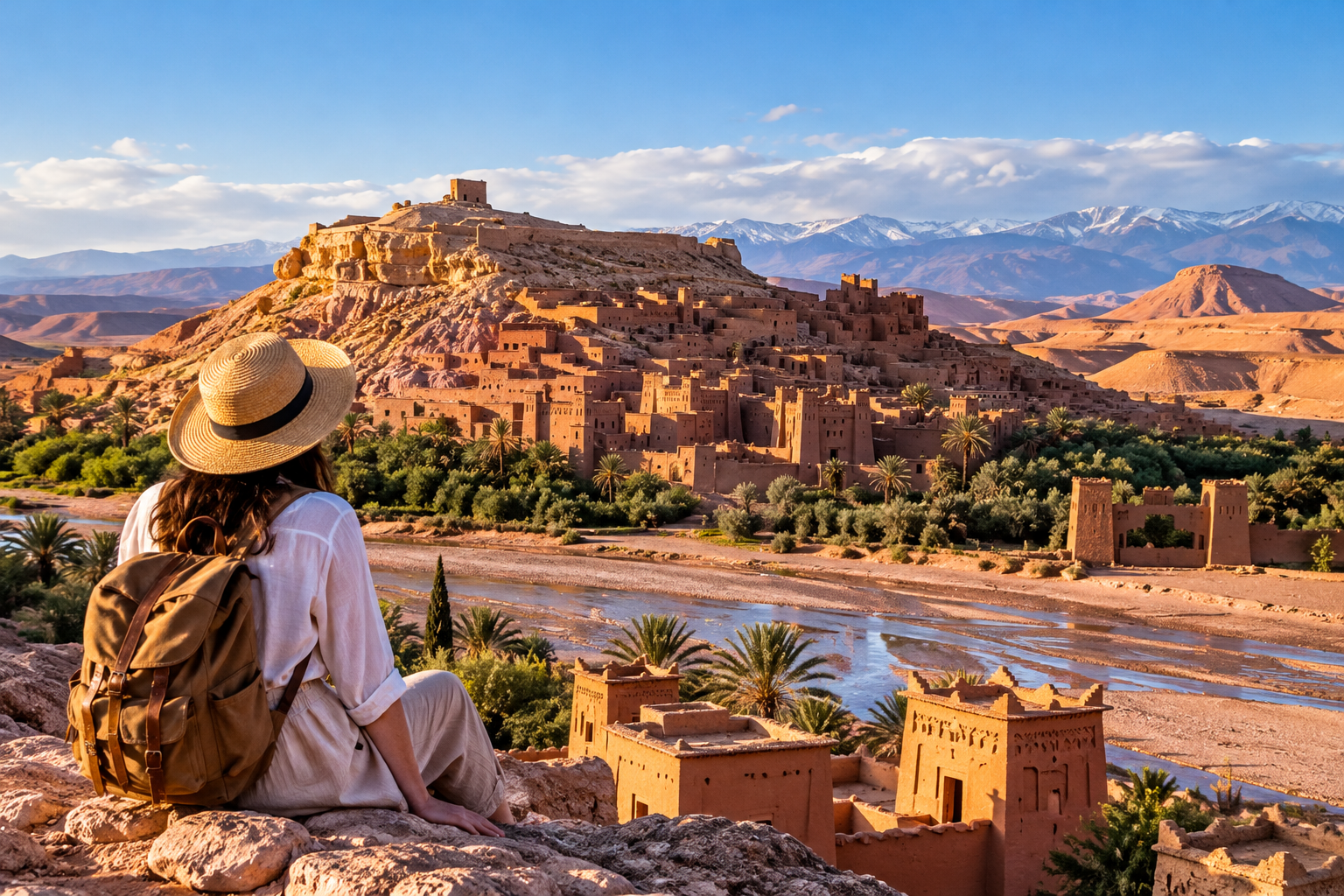
One of the most important stops is Ait Ben Haddou, a traditional fortified village recognized as a UNESCO World Heritage Site.
Its earthen buildings, towers and narrow streets represent an exceptional example of pre-Saharan architecture.
The village has also served as a filming location for numerous international productions.
Walking through Ait Ben Haddou provides an opportunity to discover the architecture and history of southern Morocco.
Continue Toward Dades Valley
After visiting Ait Ben Haddou, the journey continues toward Ouarzazate and the Dades Valley.
The landscape features traditional kasbahs, palm groves and remarkable rock formations.
Overnight stay: Dades Valley.
Day 4: Todra Gorge and the Sahara Desert
The fourth day introduces some of the most spectacular natural landscapes of Morocco.
After breakfast, continue toward the famous Todra Gorge.
Discover Todra Gorge
Located near Tinghir, Todra Gorge is a dramatic canyon surrounded by towering limestone cliffs.
Visitors can walk through the narrowest section of the gorge and admire the impressive rock walls.
The surrounding region also features traditional villages and beautiful palm-filled valleys.
Journey to Merzouga
After exploring the gorge, continue through the southeastern landscapes of Morocco toward Merzouga.
As you approach the desert, the scenery gradually changes from rocky mountains and plateaus to vast arid plains.
Merzouga is a small village situated near the spectacular Erg Chebbi dunes.
First Views of the Sahara
Upon arrival, you can admire the enormous golden dunes stretching toward the horizon.
The colors of the sand change throughout the day, creating particularly beautiful landscapes at sunset.
Overnight stay: Merzouga.
Day 5: Sahara Desert Experience in Merzouga
The fifth day is dedicated to exploring the Sahara Desert.
Merzouga offers numerous opportunities to discover desert landscapes, traditional communities and local culture.
Explore the Erg Chebbi Dunes
The Erg Chebbi dunes are among the most famous desert landscapes in Morocco.
Guided excursions allow visitors to experience the beauty and silence of the Sahara.
Depending on your preferences and the available services, activities may include:
- Guided walks across the dunes.
- 4×4 desert excursions.
- Visits to traditional villages.
- Opportunities to learn about local customs.
- Sunset photography.
- Camel rides offered by some operators.
Discover Local Traditions
The Merzouga region is home to communities with rich cultural traditions.
Visitors may have opportunities to discover local music, handicrafts and regional cuisine through organized experiences.
Spend a Night in a Desert Camp
One of the most memorable moments of the tour is an overnight stay in the Sahara.
Desert camps range from simple traditional tents to more comfortable accommodation with additional facilities.
Many offer Moroccan dinners and opportunities to experience local musical traditions.
When weather conditions are favorable, the desert sky provides an extraordinary setting for stargazing.
Overnight stay: Sahara Desert camp near Merzouga.
Day 6: Merzouga to Fes via Ziz Valley and Middle Atlas
After your desert experience, the journey continues north toward Fes.
This is a long travel day, but the route passes through several remarkable landscapes.
The Ziz Valley
One of the first highlights is the Ziz Valley, known for its extensive palm groves and beautiful oasis scenery.
The contrast between the green vegetation and surrounding arid mountains creates impressive panoramic views.
Midelt and the Middle Atlas Mountains
As the route continues north, the scenery gradually changes.
The rocky desert landscapes give way to mountains, forests and highland plateaus.
The journey may pass through Midelt, Azrou and Ifrane, depending on the chosen route.
Discover Ifrane
Ifrane is particularly interesting because its architecture and mountain setting differ from many other Moroccan cities.
The region is known for its cooler climate and surrounding natural landscapes.
In the evening, arrive in Fes, one of Morocco’s most important imperial cities.
Overnight stay: Fes.
Day 7: Discovering the Imperial City of Fes
Fes is considered one of Morocco’s major cultural and spiritual centers.
Its historic medina, Fes el-Bali, is recognized as a UNESCO World Heritage Site and preserves an extraordinary architectural heritage.
Explore Fes el-Bali
The medina is famous for its narrow streets, traditional markets, historic buildings and artisan workshops.
Walking through the old city offers visitors an opportunity to experience Moroccan traditions that have been preserved for centuries.
Chouara Tanneries
One of the best-known attractions is the Chouara Tanneries.
These traditional leatherworking workshops are famous for their colorful dyeing vats and historic production techniques.
Visitors can observe the tanneries from some of the surrounding terraces.
Bou Inania Madrasa
The Bou Inania Madrasa is another important historical landmark.
Built during the Marinid period, it is admired for its intricate decorations, carved wood and traditional architectural details.
Al-Qarawiyyin Area
The historic al-Qarawiyyin complex is associated with one of the most important institutions of learning in the Islamic world.
Although access to certain religious areas is restricted, the surrounding neighborhood is rich in cultural and architectural interest.
Traditional Markets
Spend some time exploring the markets and workshops of Fes.
The city is particularly famous for leather products, pottery, metalwork and traditional crafts.
Overnight stay: Fes.
Day 8: Meknes, Volubilis and Departure
The final day can include additional cultural stops before the end of your journey.
Depending on flight arrangements, travelers may visit Meknes and Volubilis.
Discover Meknes
Meknes is one of Morocco’s four imperial cities.
The city became especially important during the reign of Sultan Moulay Ismail in the seventeenth and eighteenth centuries.
Its historic center includes monumental gates, impressive walls and important architectural landmarks.
Visit Volubilis
Located near Meknes, Volubilis is one of Morocco’s most significant Roman archaeological sites.
The UNESCO-listed site preserves remarkable mosaics, columns and remains of ancient buildings.
Its beautiful countryside setting makes it an interesting destination for travelers who enjoy history and archaeology.
End of the Tour
After the visits, the journey can end with a transfer to the selected departure airport.
Fes is the most convenient departure city for this itinerary, while Casablanca may be considered if flight arrangements and travel time allow.
The final day’s schedule should always be adapted to the departure time of your flight.
How Much Does an 8-Day Morocco Tour Cost?
The cost of an eight-day Morocco tour depends on several factors.
These include:
- Travel dates and season.
- Number of participants.
- Private or shared transportation.
- Accommodation category.
- Desert camp facilities.
- Meals included in the itinerary.
- Guided visits and activities.
- Arrival and departure airports.
A private tour generally offers greater flexibility in planning stops and departure times.
Group tours may allow travelers to share certain transportation and accommodation costs.
Before booking, it is important to check the complete itinerary and confirm which services are included.
What Is the Best Time for an 8-Day Morocco Tour?
Morocco can be visited throughout the year, but weather conditions vary considerably between regions.
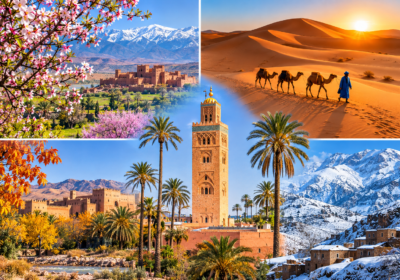
Spring: March to May
Spring is generally one of the best seasons for exploring Morocco.
Temperatures are often comfortable for visiting imperial cities and traveling through the southern regions.
Autumn: September to November
Autumn is another excellent period for combining cultural attractions with Sahara Desert experiences.
October and November are particularly popular for desert itineraries.
Summer: June to August
Summer temperatures can be extremely high in Marrakech and the Sahara Desert.
Travelers should plan outdoor activities carefully and avoid excessive exposure to midday heat.
Winter: December to February
Winter can provide pleasant daytime temperatures in some cities, but nights in the desert and mountainous regions may become very cold.
Warm clothing is essential for overnight stays in these areas.
What to Pack for an 8-Day Morocco Tour
An itinerary covering cities, mountains and desert regions requires versatile clothing and practical travel accessories.
Recommended items include:
- Comfortable walking shoes.
- Lightweight clothing for warm days.
- A warm jacket for cooler evenings.
- Sunglasses and sunscreen.
- A hat or scarf for sun and wind protection.
- A reusable water bottle.
- Personal medication and travel essentials.
- A camera or smartphone.
- A power bank for electronic devices.
If you are traveling during winter, pack additional warm layers for the Atlas Mountains and Sahara Desert.
Private Tour or Group Tour: Which Is Better?
Both private and group tours can offer rewarding travel experiences.
Private Morocco Tour
A private tour is suitable for travelers who prefer a flexible schedule.
It may allow more freedom to choose stops, organize activities and adapt the journey to personal interests.
Private tours are often popular with couples, families and small groups.
Group Morocco Tour
A group tour follows a planned itinerary shared with other travelers.
It can be an interesting option for those who enjoy meeting new people and prefer a structured travel experience.
The right choice depends on your budget, travel preferences and desired level of flexibility.
Experience the Best of Morocco in Eight Days
An eight-day journey through Morocco offers an extraordinary combination of historic cities, dramatic mountain scenery, traditional villages and desert landscapes.
From the lively atmosphere of Marrakech to the remarkable medina of Fes, every destination reveals a different aspect of Moroccan culture.
Crossing the Atlas Mountains, exploring ancient kasbahs and experiencing the Sahara Desert create unforgettable memories.
The key to a successful journey is choosing a well-planned itinerary that balances sightseeing opportunities with realistic travel times.
Plan Your Morocco Adventure with Travel Morocco Guide
Are you dreaming of discovering Morocco’s imperial cities, breathtaking mountains and spectacular desert landscapes?
With Travel Morocco Guide, you can explore itineraries and travel experiences designed to introduce you to the country’s most fascinating destinations.
Whether you want to discover Marrakech, explore Fes or experience the beauty of the Sahara Desert, choosing the right itinerary is the first step toward an unforgettable adventure.
Explore our Morocco tours and start planning your next journey.