When is the best time to visit Morocco? This is one of the most common questions travelers ask when planning a journey to this fascinating North African country.
Morocco is a destination that can be explored throughout the year. However, choosing the right season can make your travel experience considerably more enjoyable.
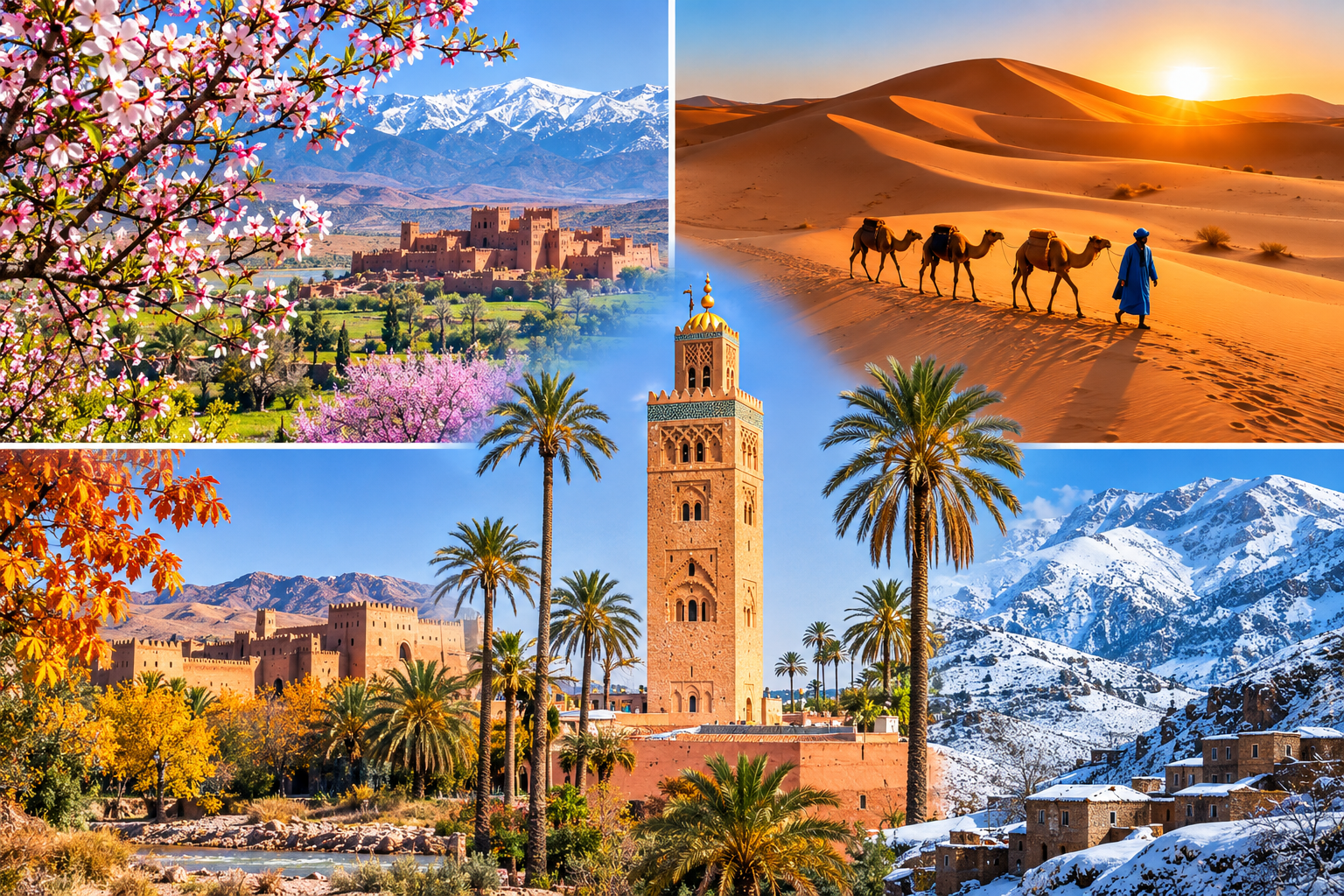
The country’s climate varies significantly between its historic imperial cities, the Atlas Mountains, the Atlantic coast and the Sahara Desert.
While Marrakech can experience intense summer heat, coastal cities such as Essaouira often enjoy more moderate temperatures. Meanwhile, the mountains may receive snow during winter, and the desert can experience surprisingly cold nights.
Whether you are planning a cultural journey, a Sahara Desert adventure or a relaxing coastal holiday, understanding Morocco’s climate will help you choose the ideal travel dates.
In this guide, you will discover the best months to visit Morocco, seasonal weather conditions and practical advice for planning your trip.
What Is the Best Time to Visit Morocco?
In general, spring and autumn are the best seasons to visit Morocco, particularly for travelers who want to explore several regions during the same journey.
From March to May and from September to November, temperatures are often more comfortable for visiting cities, exploring traditional villages and traveling through southern Morocco.
However, the ideal period depends on the destinations and activities you choose.
- March, April and May: Excellent for imperial cities, cultural tours and natural landscapes.
- June, July and August: Better suited to coastal destinations, while inland regions can be extremely hot.
- September, October and November: Ideal for cultural itineraries and Sahara Desert adventures, particularly from October.
- December, January and February: Suitable for sightseeing in cooler conditions, although nights can be cold.
Morocco offers different experiences in every season, making it important to plan according to your travel interests.
Understanding Morocco’s Climate
Morocco’s climate is influenced by its geographical position, the Atlantic Ocean, the Mediterranean Sea and the Atlas Mountains.
As a result, weather conditions can vary dramatically between different parts of the country.
Climate in the Imperial Cities
Marrakech, Fes, Meknes and Rabat are among Morocco’s most important cultural destinations.
Inland cities such as Marrakech and Fes often experience very hot summers.
Spring and autumn generally provide more comfortable conditions for walking through historic medinas and visiting monuments.
Rabat, located near the Atlantic coast, usually enjoys milder temperatures.
Climate in the Sahara Desert
The Sahara Desert has an arid climate characterized by limited rainfall and considerable differences between daytime and nighttime temperatures.
During summer, daytime temperatures can become extremely high.
In winter, the days may be pleasant and sunny, but nights can be very cold.
Spring and autumn are generally the most comfortable seasons for visiting Merzouga and the Erg Chebbi dunes.
Climate in the Atlas Mountains
The Atlas Mountains experience different weather conditions from Morocco’s cities and desert regions.
During winter, higher elevations may receive significant snowfall and temperatures can fall below freezing.
Spring and autumn are often suitable for exploring mountain valleys and traditional villages.
For high-altitude trekking, weather forecasts and local conditions should always be checked carefully.
Climate on Morocco’s Atlantic Coast
Coastal destinations such as Essaouira, Agadir and Casablanca benefit from the influence of the Atlantic Ocean.
Temperatures are generally more moderate than in inland regions.
During summer, the coast can provide an appealing alternative to the intense heat of Marrakech and the Sahara Desert.
Visiting Morocco in Spring: March, April and May
Spring is one of the most popular seasons for exploring Morocco.
Temperatures gradually become warmer, and many destinations offer favorable conditions for sightseeing and outdoor activities.
Morocco in March
March marks the transition from winter to spring.
In Marrakech, daytime temperatures are often comfortable, although evenings may remain cool.
It is a good period for exploring imperial cities and organizing excursions through southern Morocco.
Mountain regions may still experience winter conditions.
Morocco in April
April is one of the most attractive months for a journey through Morocco.
Temperatures are often suitable for walking through medinas, visiting historic kasbahs and exploring desert regions.
Marrakech, Fes and southern Morocco are particularly appealing during this period.
Morocco in May
In May, temperatures continue to rise, especially in inland cities.
The month is still suitable for many cultural itineraries, although outdoor activities should take the warmer weather into account.
Coastal destinations also become increasingly attractive for relaxing holidays.
Who should visit Morocco in spring? Travelers planning their first visit, cultural tours or journeys combining cities, mountains and desert landscapes.
Visiting Morocco in Summer: June, July and August
Summer in Morocco is characterized by high temperatures, especially in inland and desert regions.
However, the country still offers attractive destinations during the warmer months.
Morocco in June
June marks the beginning of the hottest period in many regions.
Temperatures rise significantly in Marrakech and southern Morocco.
Coastal towns often provide more moderate conditions and can be a good choice for travelers who prefer cooler weather.
Morocco in July
July is generally one of Morocco’s hottest months.
In Marrakech, average daytime highs are around 38°C, although temperatures can rise further during heatwaves.
Sightseeing in inland cities can become challenging during the middle of the day.
Essaouira and Agadir are popular alternatives thanks to the influence of the Atlantic Ocean.
Morocco in August
August usually brings conditions similar to July, with intense heat in inland areas.
Travelers visiting Marrakech should consider planning outdoor activities early in the morning or late in the afternoon.
The Atlantic coast remains an appealing option for beach holidays and relaxation.
Who should visit Morocco in summer? Travelers interested in coastal destinations, beaches and seaside activities.
Visiting Morocco in Autumn: September, October and November
Autumn is one of the best periods for exploring Morocco’s cultural attractions and natural landscapes.
Temperatures gradually decrease, making outdoor activities more comfortable.
Morocco in September
September is a transition month between summer and autumn.
Temperatures may remain high, especially during the first weeks.
Coastal destinations are still attractive, while inland cities generally become more comfortable toward the end of the month.
Morocco in October
October is one of the best months to visit Morocco.
Temperatures are often suitable for exploring Marrakech, Fes and other cultural destinations.
It is also an excellent period for organizing Sahara Desert tours, with conditions generally more manageable than during summer.
Morocco in November
November often offers moderate daytime temperatures across many regions.
Evenings become cooler, and rainfall may increase in northern areas.
In the Sahara Desert, visitors should be prepared for significant temperature differences between day and night.
Who should visit Morocco in autumn? Travelers interested in imperial cities, cultural experiences, mountain scenery and desert excursions.
Visiting Morocco in Winter: December, January and February
Winter is an interesting season for exploring Morocco in cooler temperatures.
Weather conditions vary considerably depending on the region.
Morocco in December
December can be a good time for visiting Marrakech and other historic cities.
Daytime temperatures are often relatively mild, although nights can be cold.
Mountain and desert regions may experience particularly low nighttime temperatures.
Accommodation demand can increase during Christmas and New Year holidays.
Morocco in January
January is generally one of Morocco’s coldest months.
In Marrakech, average daytime highs are approximately 19°C, but nighttime temperatures can fall significantly.
Snow is possible in the Atlas Mountains, particularly at higher elevations.
The Sahara Desert can still be visited, but warm clothing is essential for overnight stays.
Morocco in February
February retains many winter characteristics, although temperatures begin gradually increasing in several regions.
It can be a good period for travelers who prefer cooler weather and want to avoid the intense summer heat.
Who should visit Morocco in winter? Travelers who enjoy cultural sightseeing and do not mind chilly evenings.
Best Time to Visit Marrakech
Marrakech is one of Morocco’s most popular destinations.
The months generally recommended for visiting are March, April, May, October and November.
During these periods, temperatures are often more comfortable for exploring the souks, historic palaces and beautiful gardens.
Summer can be extremely hot, making sightseeing more challenging during midday.
Winter days can be pleasant, but visitors should bring a jacket for cooler evenings.
For most travelers, spring and autumn offer the best conditions for discovering Marrakech on foot.
Best Time to Visit the Sahara Desert
For travelers planning a Sahara Desert excursion, spring and autumn are generally the most suitable seasons.
March, April, October and November are often recommended for visiting Merzouga and the Erg Chebbi dunes.
During these months, travelers can enjoy activities such as:
- Guided walks across the dunes.
- 4×4 desert excursions.
- Overnight stays in desert camps.
- Visits to traditional villages.
- Sunrise and sunset photography.
- Cultural experiences with local communities.
Summer temperatures can be extremely high, while winter nights can become very cold.
Checking the weather forecast before departure is always advisable.
Best Time to Visit Morocco’s Imperial Cities
Morocco’s four imperial cities are Marrakech, Fes, Meknes and Rabat.
Spring and autumn are generally the best seasons for organizing an itinerary that includes all four destinations.
Moderate temperatures make it easier to explore medinas and historic monuments.
During summer, particularly in Marrakech and Fes, high temperatures can make walking tours more demanding.
Morocco Weather by Month: Quick Overview
The following table provides an overview of the seasons and recommended travel experiences.
| Month | Recommended Experiences |
|---|---|
| January | Cultural sightseeing and imperial cities |
| February | Marrakech, Fes and historic attractions |
| March | Imperial cities, southern Morocco and Sahara tours |
| April | Multi-region itineraries, desert and natural landscapes |
| May | Cities, mountain valleys and coastal destinations |
| June | Atlantic coast and seaside holidays |
| July | Essaouira, Agadir and beach experiences |
| August | Atlantic coast and coastal relaxation |
| September | Coastal destinations and late-month cultural tours |
| October | Sahara Desert and imperial cities |
| November | Marrakech, Fes and southern Morocco |
| December | Historic cities and cultural experiences |
These recommendations reflect general seasonal patterns. Actual weather can vary from year to year.
What Is the Best Month for a First Trip to Morocco?
If you are visiting Morocco for the first time and want to explore different regions, April and October are particularly attractive choices.
During these months, it is generally possible to combine:
- Visits to historic imperial cities.
- Excursions through the Atlas Mountains.
- Sahara Desert experiences.
- Traditional villages and kasbahs.
- Moroccan food and cultural activities.
The ideal choice also depends on your available travel time and personal interests.
What to Pack for Morocco in Each Season
Packing appropriately is particularly important when your itinerary includes regions with different climates.
Spring and Autumn
Bring lightweight clothing for daytime activities, comfortable walking shoes and a jacket for cooler evenings.
Summer
Choose breathable clothing, a hat, sunglasses and sunscreen.
Staying hydrated and avoiding prolonged exposure to extreme heat is especially important.
Winter
Pack warmer clothing, particularly if you are visiting the Atlas Mountains or spending a night in the Sahara Desert.
A jacket may also be necessary during evenings in Marrakech.
Plan Your Morocco Trip at the Perfect Time
Morocco is a remarkable destination throughout the year. Choosing the right season depends on the experiences you want to enjoy.
If you dream of exploring Marrakech, Fes and the Sahara Desert, spring and autumn generally provide the most comfortable conditions.
If you prefer coastal destinations and relaxing by the ocean, summer can also be an excellent option.
With Travel Morocco Guide, you can discover travel itineraries and explore opportunities to experience Morocco’s imperial cities, Atlas Mountains and spectacular desert landscapes.
Explore our Morocco tours and choose the ideal season for your next unforgettable adventure.