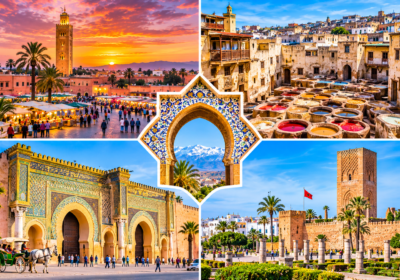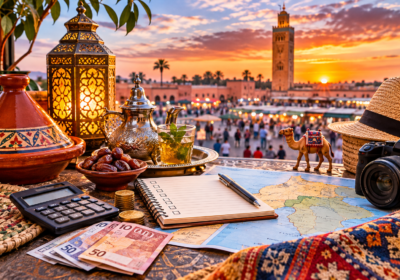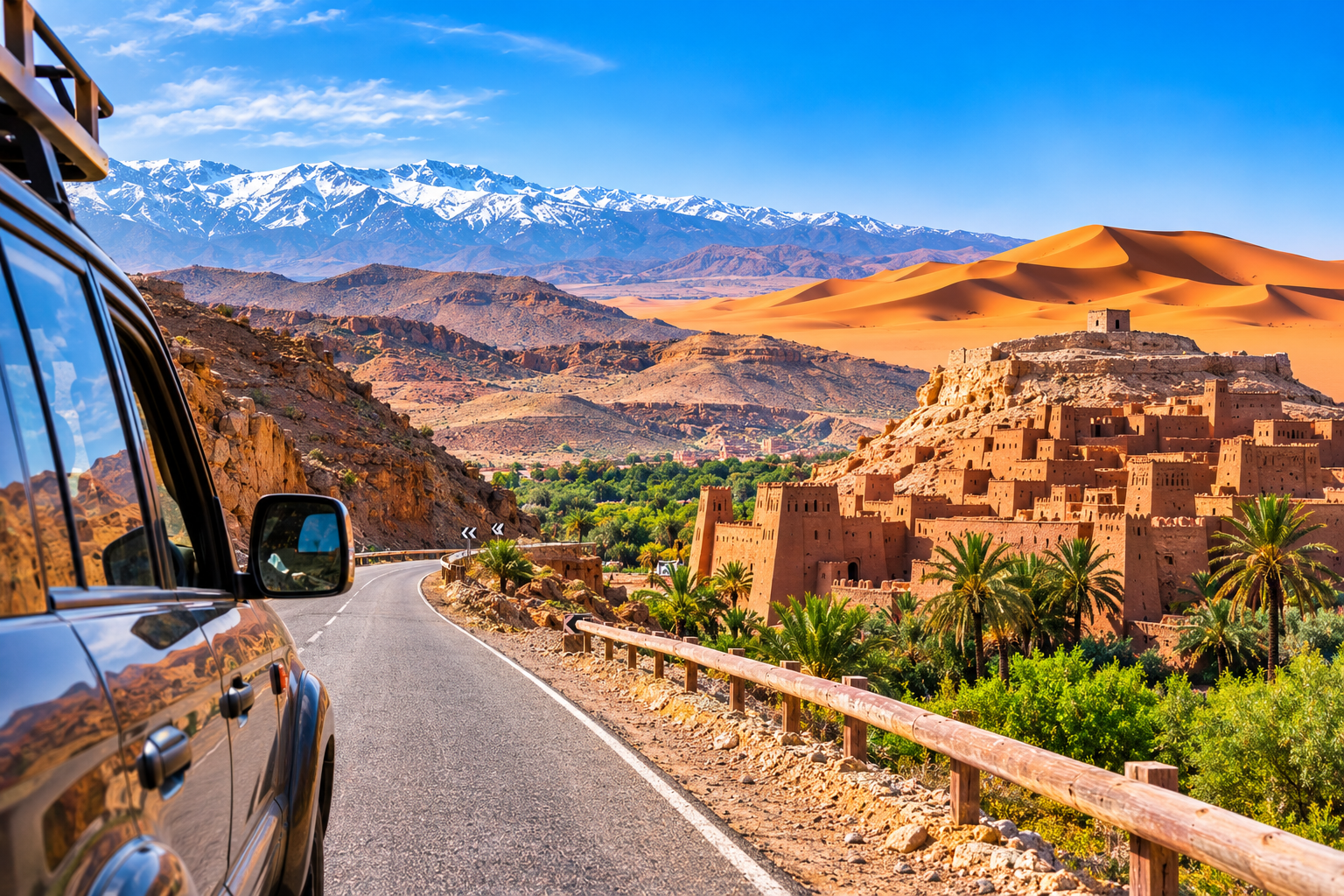
The journey from Marrakech to Merzouga is one of the most spectacular road trips in Morocco. Crossing the High Atlas Mountains, ancient fortified villages, palm-filled valleys and dramatic rocky gorges, travelers eventually reach the golden sand dunes of the Sahara Desert.
This is much more than a journey between two destinations. It is an opportunity to discover the remarkable diversity of Morocco’s landscapes, architecture and cultural traditions.
Along the route, you can explore UNESCO World Heritage Sites, visit traditional kasbahs, admire beautiful mountain scenery and experience the unforgettable atmosphere of the Erg Chebbi dunes.
In this guide, you will discover how to travel from Marrakech to Merzouga, the best places to visit along the way, how many days to spend on the journey and practical tips for organizing your Sahara Desert adventure.
Marrakech to Merzouga: Distance and Travel Time
The distance between Marrakech and Merzouga is approximately 550–560 kilometers, depending on the route.
Driving directly usually takes around nine to ten hours without extended stops. However, the journey can take considerably longer when sightseeing, meals and road conditions are taken into account.
For this reason, dividing the route into several days is generally recommended.
A popular itinerary includes:
- Marrakech.
- The High Atlas Mountains.
- Tizi n’Tichka mountain pass.
- Ait Ben Haddou.
- Ouarzazate.
- Dades Valley.
- Todra Gorge.
- Erfoud.
- Merzouga and the Erg Chebbi dunes.
Each destination offers an opportunity to discover a different aspect of southern Morocco.
First Stop: Crossing the High Atlas Mountains
Leaving Marrakech toward the southeast, the urban landscape gradually gives way to the impressive High Atlas Mountains.
The road passes through traditional villages, mountain valleys and dramatic rocky scenery.
This section of the journey provides some of the most beautiful panoramic views in Morocco.
Tizi n’Tichka Mountain Pass
One of the most famous points along the route is Tizi n’Tichka, located at approximately 2,260 meters above sea level.
The pass connects the Marrakech region with the southern side of the Atlas Mountains.
Along the way, travelers can stop at viewpoints to admire the surrounding landscape and take photographs.
During winter, weather conditions can affect the road, particularly when snow or ice is present.
It is therefore important to check road conditions before departure.
Second Stop: Ait Ben Haddou, the Ancient Fortified Village
After crossing the mountains, one of the most remarkable stops is Ait Ben Haddou.
This historic fortified village, known as a ksar, is among Morocco’s most recognizable architectural landmarks.
It was designated a UNESCO World Heritage Site in 1987.
Its traditional earthen buildings, defensive towers and narrow passageways represent an outstanding example of pre-Saharan architecture.
What to See in Ait Ben Haddou
During your visit, you can:
- Walk through the historic village.
- Admire traditional mud-brick buildings.
- Discover ancient fortified towers.
- Explore narrow streets and passageways.
- Reach panoramic viewpoints.
- Photograph the surrounding valley.
Ait Ben Haddou has also been used as a filming location for numerous international movie and television productions.
Visiting the village provides a fascinating introduction to the architectural heritage of southern Morocco.
Third Stop: Ouarzazate, the Gateway to the Desert
Continuing east, the route reaches Ouarzazate, a city often described as a gateway to the Moroccan desert.
Its location makes it an important stop for travelers exploring southern Morocco.
Ouarzazate is also known for its film studios and its connection to international cinema productions.
Visit Taourirt Kasbah
One of the city’s main historic attractions is Taourirt Kasbah.
This impressive fortified complex features traditional earthen architecture, towers, courtyards and historic rooms.
The kasbah provides insight into the important role these fortified residences once played in southern Moroccan society.
A stop in Ouarzazate offers an opportunity to discover the region’s history before continuing toward the desert.
Fourth Stop: Skoura and the Road of a Thousand Kasbahs
Leaving Ouarzazate, the journey continues toward Skoura, an oasis region famous for its extensive palm groves.
The landscape is characterized by green vegetation, traditional settlements and historic fortified buildings.
The contrast between the palm trees and the surrounding ochre-colored architecture creates beautiful scenery.
Kasbah Amridil
One of the best-known historic buildings in the area is Kasbah Amridil.
It is an important example of southern Morocco’s traditional fortified architecture.
Visiting the kasbah provides an opportunity to learn about historic residential structures and daily life in the oasis regions.
This part of the journey is often associated with the famous Road of a Thousand Kasbahs, an itinerary rich in history and traditional architecture.
Fifth Stop: Discover Dades Valley
Continuing east, you will reach Dades Valley, known for its dramatic rock formations, mountain scenery and traditional villages.
This region is one of the most picturesque destinations along the journey toward Merzouga.
Dades Gorge
Dades Gorge is famous for its impressive rocky landscapes and scenic mountain roads.
Some sections feature dramatic hairpin bends surrounded by steep cliffs.
The valley also offers opportunities for nature walks and visits to nearby villages.
Where to Stay in Dades Valley
For travelers following a three-day or four-day itinerary from Marrakech to Merzouga, Dades Valley is a popular location for an overnight stop.
Accommodation options include small hotels, traditional guesthouses and locally operated properties.
Spending the night in this region helps divide the journey into more manageable stages.
Sixth Stop: The Spectacular Todra Gorge
One of southern Morocco’s most impressive natural attractions is Todra Gorge, located near Tinghir.
The gorge is characterized by towering limestone cliffs surrounding a narrow passage.
Its dramatic landscape makes it particularly popular with photographers and nature lovers.
Things to Do at Todra Gorge
Visitors can:
- Walk through the narrowest part of the canyon.
- Admire the impressive rock walls.
- Photograph the landscape.
- Discover nearby traditional villages.
- Explore surrounding palm groves.
- Join guided outdoor excursions.
Todra Gorge is an excellent stop for travelers who want to experience the natural beauty of southern Morocco.
After the visit, the route continues toward increasingly arid landscapes.
Seventh Stop: Erfoud and the Pre-Saharan Landscapes
As you approach Merzouga, the scenery changes significantly.
Mountain valleys gradually give way to rocky plains, desert landscapes and small settlements.
One of the towns commonly visited along the route is Erfoud.
The region is known for its fossil heritage and workshops specializing in decorative stone products.
Erfoud also serves as an important stopping point for travelers heading toward Merzouga and the Erg Chebbi dunes.
Eighth Stop: Merzouga and the Erg Chebbi Dunes
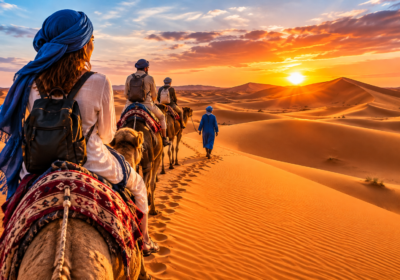
Arriving in Merzouga is one of the most memorable moments of the journey.
This small desert village is located near the spectacular Erg Chebbi dunes, one of Morocco’s most famous Sahara landscapes.
The enormous dunes rise above the surrounding plains, creating a remarkable panorama of golden sand.
Throughout the day, their colors change according to the sunlight.
At sunrise, the sand often displays soft pink tones. At sunset, the dunes become illuminated by warm orange and golden colors.
Watch the Sunset in the Sahara
Sunset is one of the most magical moments in Merzouga.
As the sun approaches the horizon, the dunes create beautiful patterns of light and shadow.
It is an excellent opportunity for photography and for enjoying the peaceful desert atmosphere.
Explore the Desert Dunes
Activities around Merzouga may include:
- Guided walks across the sand dunes.
- 4×4 excursions.
- Visits to traditional villages.
- Cultural experiences with local communities.
- Camel rides offered by some operators.
The available activities depend on the tour provider, weather conditions and individual preferences.
Spend a Night in a Desert Camp
An overnight stay in the Sahara Desert is one of Morocco’s most distinctive travel experiences.
Desert camps offer different levels of accommodation, ranging from simple tents to more comfortable facilities.
Many camps provide traditional Moroccan dinners, breakfast and opportunities to experience local musical traditions.
On clear nights, the desert can offer excellent conditions for stargazing.
Before booking, always check the camp’s location, facilities and included services.
Marrakech to Merzouga in 3 Days: Suggested Itinerary
A three-day tour is one of the most popular ways to reach Merzouga from Marrakech.
However, travelers should be prepared for long driving distances.
Day 1: Marrakech – Ait Ben Haddou – Dades Valley
Depart from Marrakech and cross the High Atlas Mountains.
Stop at Tizi n’Tichka mountain pass before continuing toward Ait Ben Haddou.
Visit the historic fortified village and travel through the Ouarzazate region.
In the afternoon, continue toward Dades Valley.
Overnight stay: Dades Valley.
Day 2: Todra Gorge – Erfoud – Merzouga
After breakfast, depart toward Todra Gorge.
Explore the dramatic canyon and continue through southeastern Morocco.
Arrive in Merzouga during the afternoon, depending on travel conditions.
Enjoy the desert landscape and, if included in your tour, take part in a guided excursion.
Watch the sunset over the Erg Chebbi dunes.
Overnight stay: Desert camp near Merzouga.
Day 3: Merzouga – Marrakech
Wake up early to admire the sunrise over the dunes.
After breakfast, begin the return journey to Marrakech.
The journey involves many hours of driving and is usually the most demanding day of the itinerary.
Travelers with more time may prefer a four-day tour.
Marrakech to Merzouga in 4 Days: A More Relaxed Itinerary
A four-day journey allows travelers to distribute the driving time more comfortably and spend additional time at some of the attractions.
A possible itinerary includes:
Day 1: Marrakech, High Atlas Mountains, Ait Ben Haddou and Ouarzazate.
Day 2: Skoura, Dades Valley, Todra Gorge and Merzouga.
Day 3: Desert exploration, cultural activities and an afternoon journey toward an intermediate overnight destination.
Day 4: Return to Marrakech through southern Morocco.
This option provides more flexibility than a three-day tour, although the overall distances remain considerable.
A longer itinerary may be even more suitable for travelers who prefer shorter driving days.
How to Travel from Marrakech to Merzouga
There are several ways to reach Merzouga from Marrakech.
Organized Desert Tours
An organized tour allows travelers to leave transportation arrangements and itinerary planning to a tour operator.
This can be a convenient choice for visitors who prefer not to drive.
Depending on the package, tours may include accommodation, selected meals and guided activities.
Renting a Car
Renting a car provides greater independence when choosing stops and sightseeing locations.
However, the route involves mountain roads and long driving distances.
Drivers should consider their experience, check road conditions and plan suitable rest stops.
Reaching desert camps may require transportation arranged by the accommodation provider.
Public Transportation
Merzouga can also be reached using buses and other road transportation connections.
This option may require more planning and additional travel time.
It is particularly suitable for independent travelers with flexible schedules.
Best Time to Travel from Marrakech to Merzouga
The season can significantly influence your experience.
Spring
From March to May, temperatures are generally favorable for traveling through southern Morocco.
Spring is one of the most recommended seasons for combining cultural sightseeing with Sahara Desert excursions.
Autumn
From September to November, summer heat gradually decreases.
October and November are particularly attractive months for visiting Merzouga.
Summer
During summer, temperatures in the desert can become extremely high.
Outdoor activities should be planned carefully, with particular attention to heat exposure and hydration.
Winter
Winter days in the Sahara can be pleasant, but nighttime temperatures may drop considerably.
Mountain roads can also be affected by snow or other difficult weather conditions.
Warm clothing and suitable travel arrangements are important.
What to Pack for a Marrakech to Merzouga Road Trip
A journey through the Atlas Mountains and Sahara Desert requires clothing and equipment suitable for different environments.
Useful items include:
- Comfortable walking shoes.
- Lightweight, breathable clothing.
- Warm layers for evenings.
- Sunglasses.
- Sunscreen.
- A hat or scarf.
- A reusable water bottle.
- A camera or smartphone.
- A power bank.
- Personal medication and essential travel documents.
During winter, additional warm clothing is recommended, especially for overnight stays in the desert.
How Much Does a Marrakech to Merzouga Tour Cost?
The price of a desert tour depends on several factors.
These include:
- Tour duration.
- Private or shared transportation.
- Number of participants.
- Accommodation category.
- Type of desert camp.
- Meals included.
- Guided activities.
- Travel season.
Before booking, check the complete itinerary and confirm whether there are additional charges for transportation, excursions or accommodation services.
Comparing the included services is often more useful than comparing prices alone.
Is Marrakech to Merzouga Worth the Journey?
The route from Marrakech to Merzouga is one of the most rewarding travel experiences in Morocco.
The High Atlas Mountains, ancient kasbahs, dramatic rocky gorges and spectacular Erg Chebbi dunes create a journey filled with unforgettable scenery.
Each stop reveals a different aspect of the country’s history, culture and natural environment.
Although the distance is considerable, a carefully planned itinerary allows travelers to enjoy some of the most beautiful regions of southern Morocco.
For the best experience, choose a tour duration that matches your travel style and available time.
Discover Morocco Desert Tours with Travel Morocco Guide
Are you dreaming of exploring the golden dunes of the Sahara and discovering the extraordinary landscapes of southern Morocco?
With Travel Morocco Guide, you can explore travel itineraries that introduce you to Morocco’s historic cities, spectacular mountains and fascinating desert regions.
From ancient kasbahs and panoramic mountain roads to unforgettable sunsets over Merzouga, a journey toward the Sahara offers remarkable experiences.
Explore our Morocco desert tours and find the perfect itinerary for your next adventure.